Cross-
Cutting
Research Area
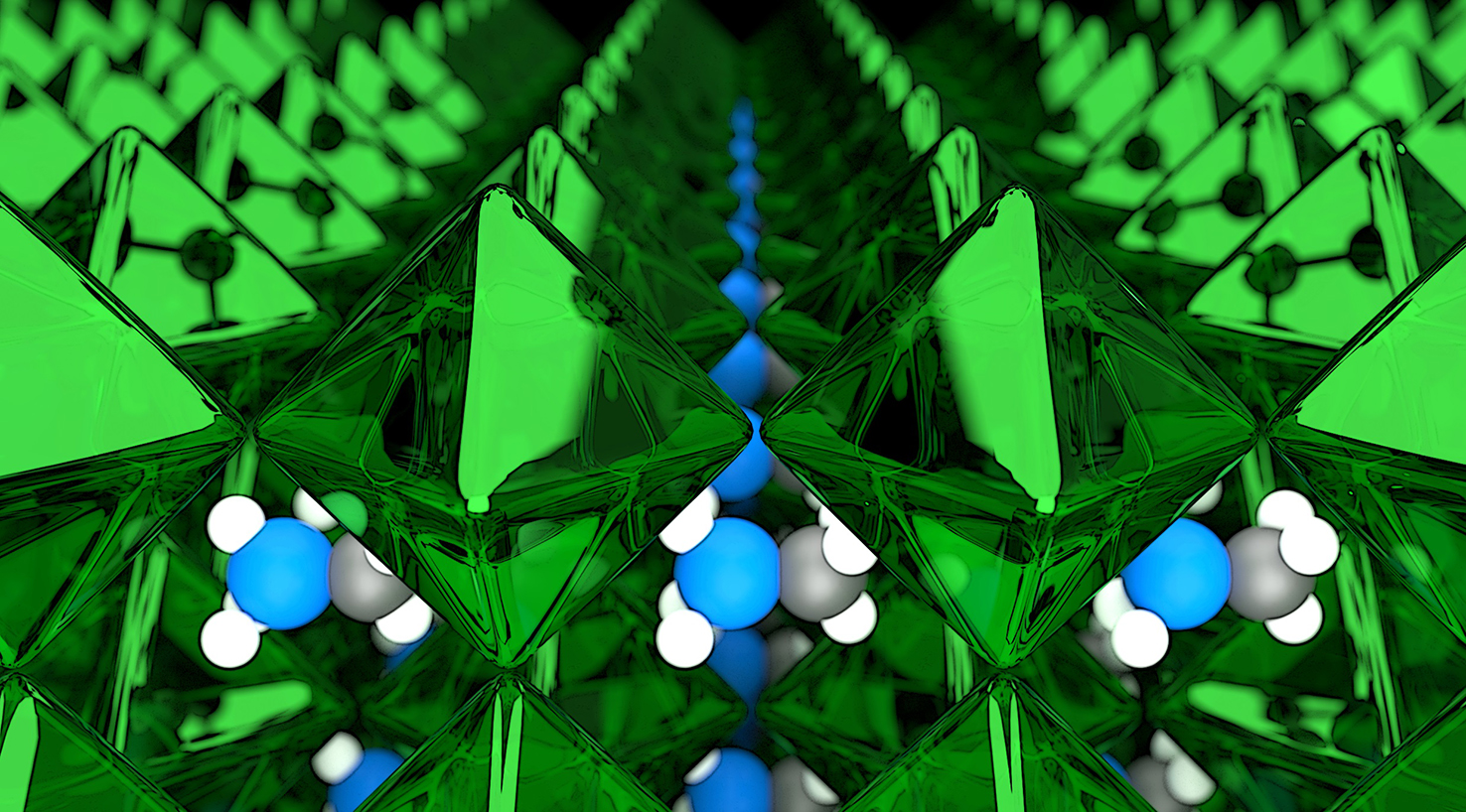
Designing new materials, atom by atom
Combining the power of quantum mechanics and high-performance computing to predict materials’ properties at the atomic scale.
Computational Quantum Mechanics Applied to Materials
What is Computational Materials Science?
The predictive accuracy of computer-aided simulations of materials is evolving rapidly to become an essential tool in materials science research. Well-established theories, implemented into highly efficient software, running on the world’s fastest supercomputers, provide unprecedented opportunities to explore the vast landscape of atomic configurations by which novel materials can be formed. This has the potential to greatly accelerate the characterization, optimization and discovery of new advanced materials for renewable energy, efficient lighting, next generation electronics and quantum computing.
Current research areas
Research is multifaceted, ranging from foundational advances in theory, methods and algorithms, to real-world impact in grand challenge problems.

Microscopic characterization of structural, electronic, optical and transport properties of advanced materials

Energy materials: solar cells, energy-efficient lighting

Materials for power electronics: ultra-wide band gap materials

Nanomaterials: 2D materials and their heterostructures

Database driven search for new magnetic materials without rare earth elements

In-silico high-throughput materials screening
Working with partners
Current partnerships include collaborations with the group of Prof. Li Shi at the UT Department of Mechanical Engineering, the group of Prof. Chih-Kang Shih at the UT Department of Physics, the group of Alex Demkov, Dr. C.Z. Wang at Iowa State and Profs. Dave Sellmyer and Xiaoshan Xu at the University of Nebraska (collaboration details).
Centers and Groups
To learn more about projects and people in Computational Materials, explore the centers and groups with research activities in this cross-cutting research area.
News in brief
News
Sept. 7, 2026
Fusion Energy Seed Grants Launch New Interdisciplinary Collaborations at UT Austin
Faculty at UT Austin have been awarded seed grants to unite fusion physicists, engineers and computational scientists while training graduate students for careers in fusion energy. The projects will develop faster, AI-assisted tools for plasma control, liquid-metal reactor materials, magnetic confinement and plasma-edge simulations.
News
July 20, 2026
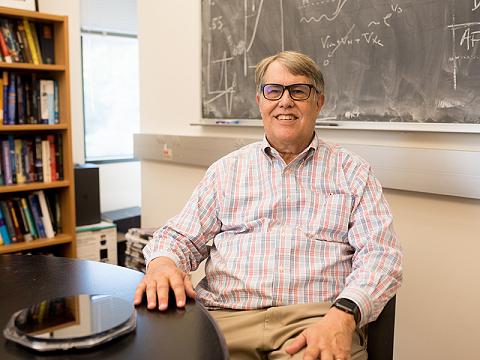
Crossing Boundaries: James Chelikowsky Reflects on Six Decades of Materials Science Discovery
James Chelikowsky reflects on six decades of his career in computational materials science.

News
May 8, 2026
Sabyasachi Tiwari Wins Award To Develop Cloud Platform for Quantum Materials Simulations
Sabyasachi Tiwari wins the Texas Proof Concept Award to develop a cloud-based software platform that simulates quantum materials using a method he developed.