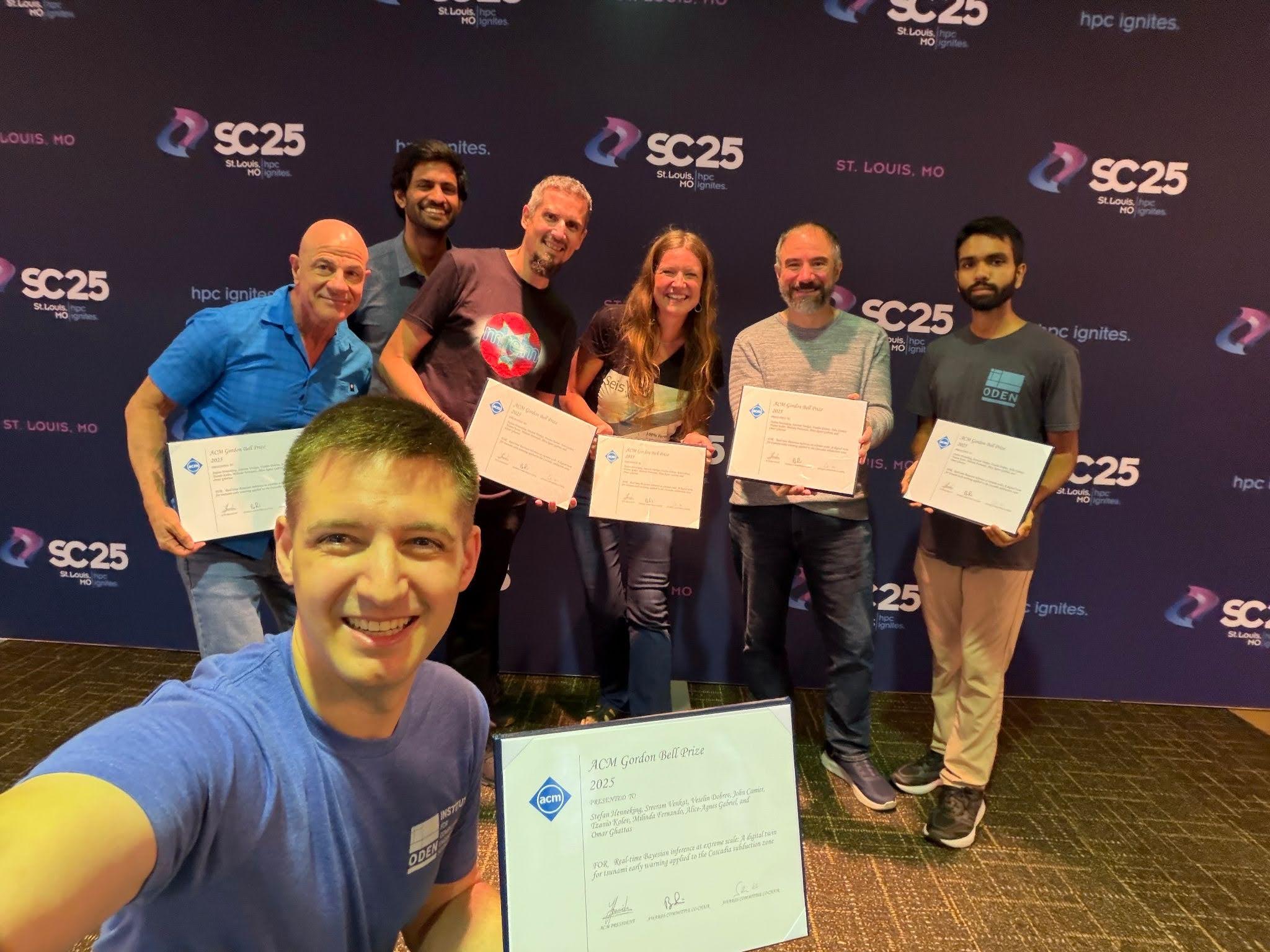
Foundations in computational and applied mathematics have always been paired with an eye toward real-world stakes. For Stefan Henneking, a research associate at the Oden Institute for Computational Engineering and Sciences, creating a digital twin to help predict tsunami impact landed him on the winning team for the Gordon Bell Prize in November 2025, awarded by the Association of Computing Machinery (ACM).
Henneking's path to high-performance computing began in Germany, where he completed his undergraduate degree in Computational Engineering at the University of Erlangen-Nuremberg. Prior to arriving at The University of Texas at Austin, Stefan attended Georgia Tech University where he earned his master's degree in Computational Science and Engineering.
Now at the Oden Institute, where he graduated from the Ph.D. program in Computational Science, Engineering, and Mathematics in 2021, Henneking continues his research on developing computational methods for large-scale problems.
A member of both the Electromagnetics and Acoustics Group and the Optimization, Inversion, Machine Learning, and Uncertainty for Complex Systems (OPTIMUS) Center, Henneking develops computational methods with a focus on Bayesian inverse problems, uncertainty quantification, and optimal experimental design.
In a nutshell this translates to using powerful computer models that help researchers better understand uncertainty, make more reliable predictions, and design smarter experiments — all with the goal of helping communities better prepare for and respond to what Mother Nature throws out.
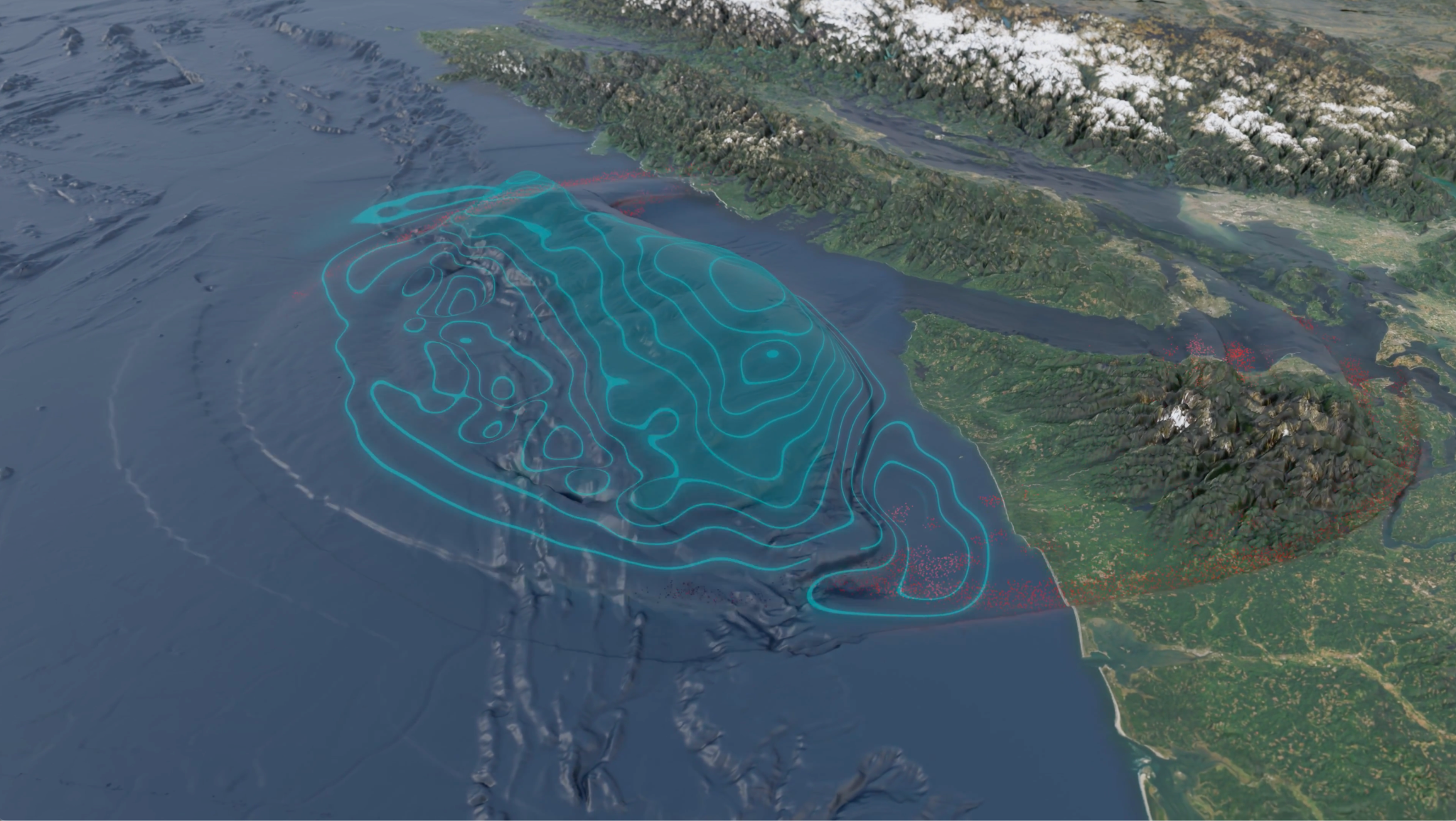
His foundational research has the potential to help local populations where every second counts, particularly in the Cascadia Subduction Zone, a large fault system off the coast of the Pacific Northwest in the United States. This region is poised for a megathrust earthquake in the coming decades, based on past history. When a magnitude 8–9 earthquake strikes, the window of time between seafloor rupture and tsunami impact on land can be measured in minutes. For these coastal areas, those minutes could make a very real difference when a powerful wall of water is approaching land.