University of Texas at Austin

News

Seeing the Possibilities: High School Students Step into Oden Institute Research World

Published May 13, 2026

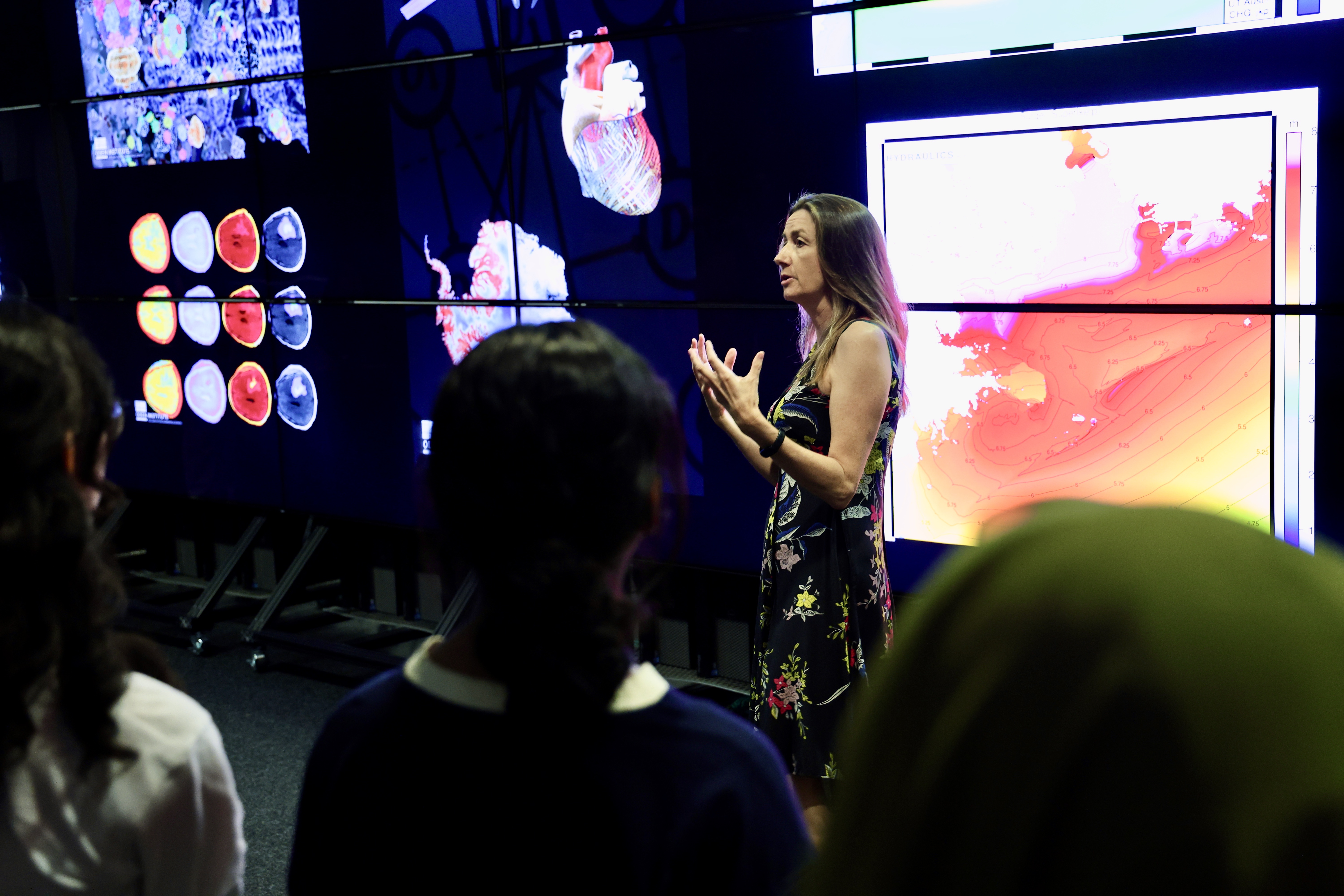
Oden Institute Director Karen Willcox with students from LASA. Credit: Joanne Foote/Oden Institute

For many high school students, college can feel distant or abstract. Partnerships between universities and local high schools help bring higher education into focus, offering students a closer look at academic pathways through hands-on learning experiences and the possibilities that await after high school as they begin planning for college and future careers.

Over the last four years, the Oden Institute for Computational Engineering and Sciences has established a partnership with local schools, including the Liberal Arts and Science Academy (LASA) High School. During their spring field trip, LASA students got a front row seat to current research on topics including cancer, the cosmos, digital twins, robotics, and ocean systems.

“As a computer science teacher, a field trip to the Oden Institute at The University of Texas at Austin truly drives home the message that computer modeling is used to tackle big issues. Experiencing it in person is much more effective, and here our students can see how big problems are addressed using computers as a primary tool,” said computer science teacher Rainer Mueller, who has been teaching for 13 years at LASA, a magnet high school within the Austin Independent School District. Mueller was joined on the field trip by computer science teacher Jim Shockey, who has been teaching for 11 years at LASA. Fun fact, Mueller and Shockey are both UT Austin graduates -- Mueller has a master’s degree in electrical engineering, and Shockey has a bachelor's degree in computer science and an MBA. 
block.caption

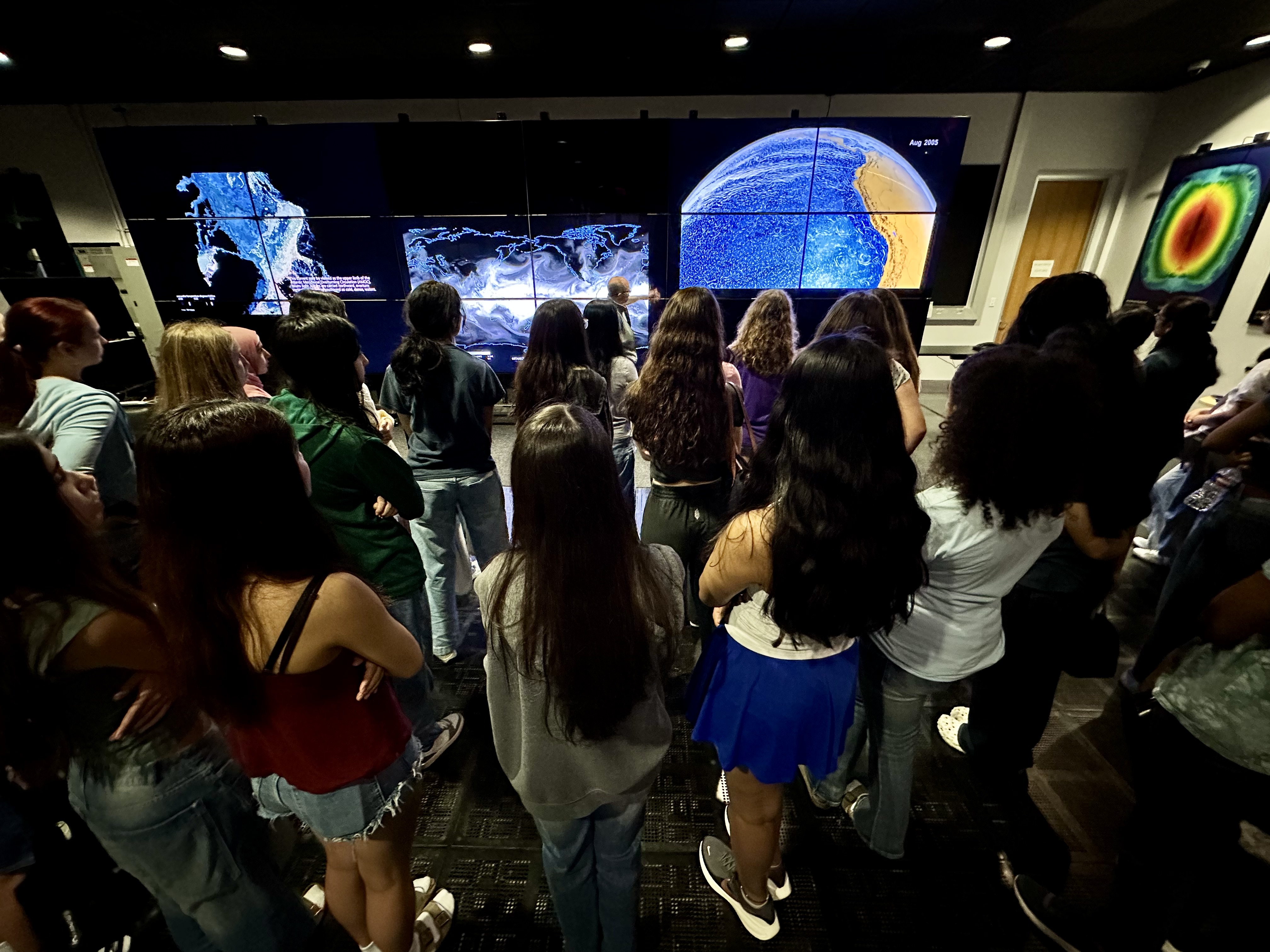
Research on ocean circulation by Professor Patrick Heimbach and his research group. Credit: Joanne Foote/Oden Institute

Led by Oden Institute Director Karen Willcox, students were greeted in the campus Texas Advanced Computing Center Visualization Lab in the Peter O’Donnell, Jr. Building. Research images splashed across a wall of screens served as a backdrop while Willcox discussed the interdisciplinary nature of how research that begins at a university can have far reaching impact with real-world applications.

“The students are so inspiring and inquisitive, and we are floored to see the depth of their technical expertise at this early stage in their careers. I’d like to give kudos to the computer science teachers at LASA for their dedication to providing such wonderful educational foundations to their students,” said Willcox.

In addition to Willcox, three Oden Institute faculty were on hand to share their research. Earth and planetary sciences professor Patrick Heimbach described his research ocean circulation while astronomy professor Stella Offner took students deep into the cosmos and with visualizations of how early stars are formed. Biomedical engineering professor Tom Yankeelov demonstrated how science and mathematics that underpins his research is advancing new cancer treatments. Yankeelov echoed his colleagues saying, “None of our research would be possible without computational models, where ideas can be tried and tried again in a safe environment with an end goal to improve outcomes and gain a better understanding in these research areas.”

Mueller noted that one never knows what experiences will trigger an interest or spark excitement for a student. “Our hope is that students will see how important computers are in addressing the many problems facing modern society and this will lead them to taking a computer science class in addition to some of the science and engineering classes they may already be taking.”

block.caption

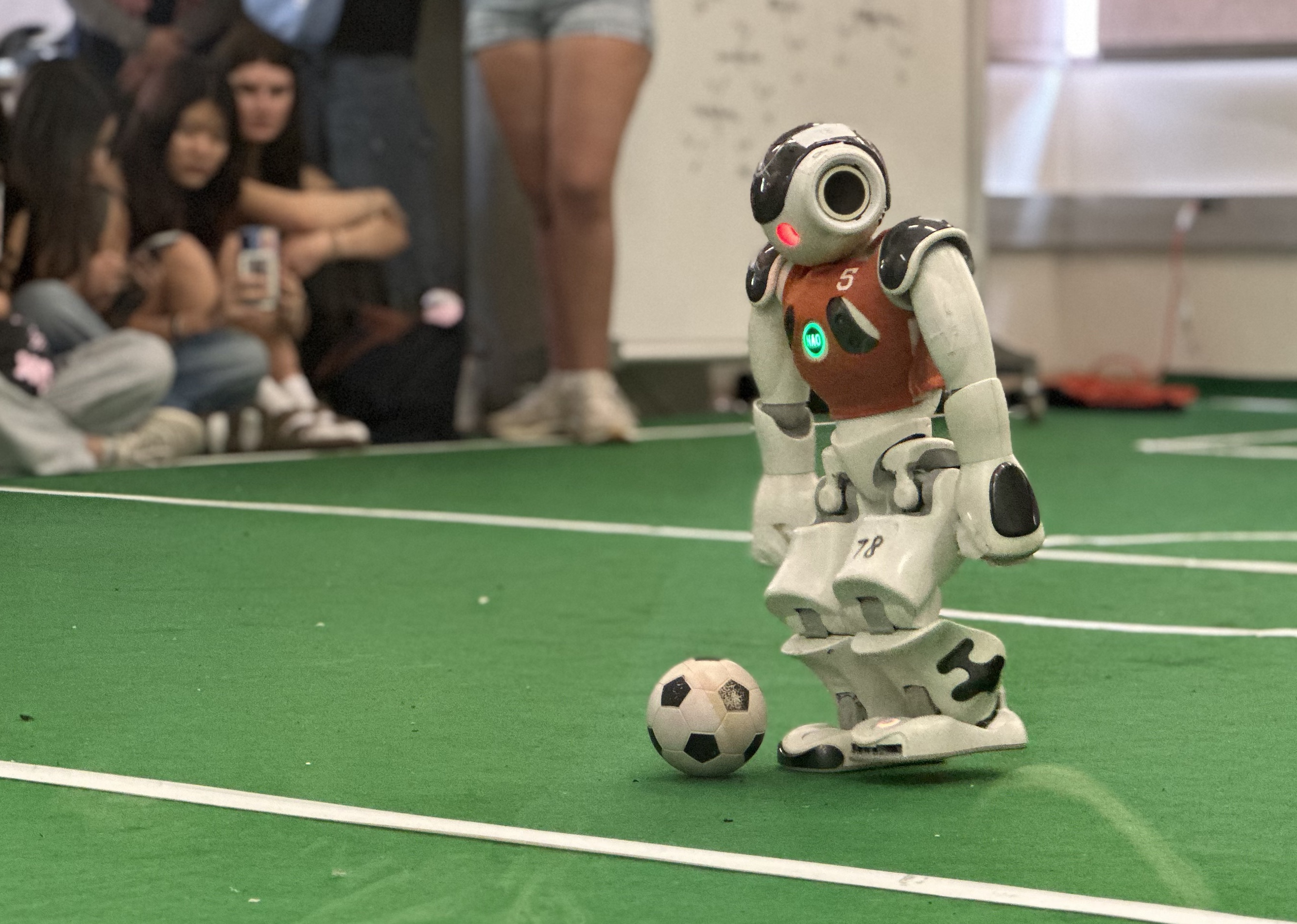
Students watch robotic soccer game. Credit: Joanne Foote/Oden Institute

Beyond faculty presentations, the high school students had front-row seats to a unique soccer match. Graduate students from Texas Robotics maneuvered two-foot-tall robots across a makeshift field, kicking a soccer ball and cheering as the robots scored. The high-school students also visited the Oden Institute’s Center for Autonomy Robotics Lab at Anna Hiss Gym, taking turns using controls to manipulate a walking robot. The experience wrapped up with a lunch-and-learn conversation with Oden Institute graduate students.

LASA student Sarah has been involved in robotics the last three years. “I loved seeing the fascinating projects being worked on. For me, this field trip was another steppingstone in solidifying my passion for technology and sciences. I've always been passionate about fields like robotics and computer science but haven't had many opportunities to see what that looks like in real life.” She added that seeing such adaptive and well-developed robots and complicated equations up close really amazed her, and noted that the robots they worked with were very blocky and shockingly much simpler than the ones she saw on the field trip. 

Other students shared that they “really liked getting to talk to the professors and graduate students and ask questions – it was great experience that helped with deciding what path to take in college.”

Mueller said seeing scientists and engineers up close goes a long way toward resetting students' impressions as well as having a diverse group of presenters and researchers. “The students realized that people just like them can work on these cool things.”

The fieldtrip was open to science, engineering and computer science LASA students including those considering computer science courses and included LASA’s Women in Computer Science (WICS) and Society of Women Engineers (SWEnext) student clubs. According to Mueller, the SWEnext club is brand new and began following a UT SWE presentation given at LASA.

By fostering relationships with high schools across its backyard, UT helps students recognize that what they are doing now matters. These moments connect learning to possibility, showing students how their interests and efforts today can lead to future careers and impact. What starts here changes the world.