University of Texas at Austin

Profile

From Molecules to Medicine: Rethinking Drug Design - Profile Dzmitry Padhorny

Published June 24, 2026

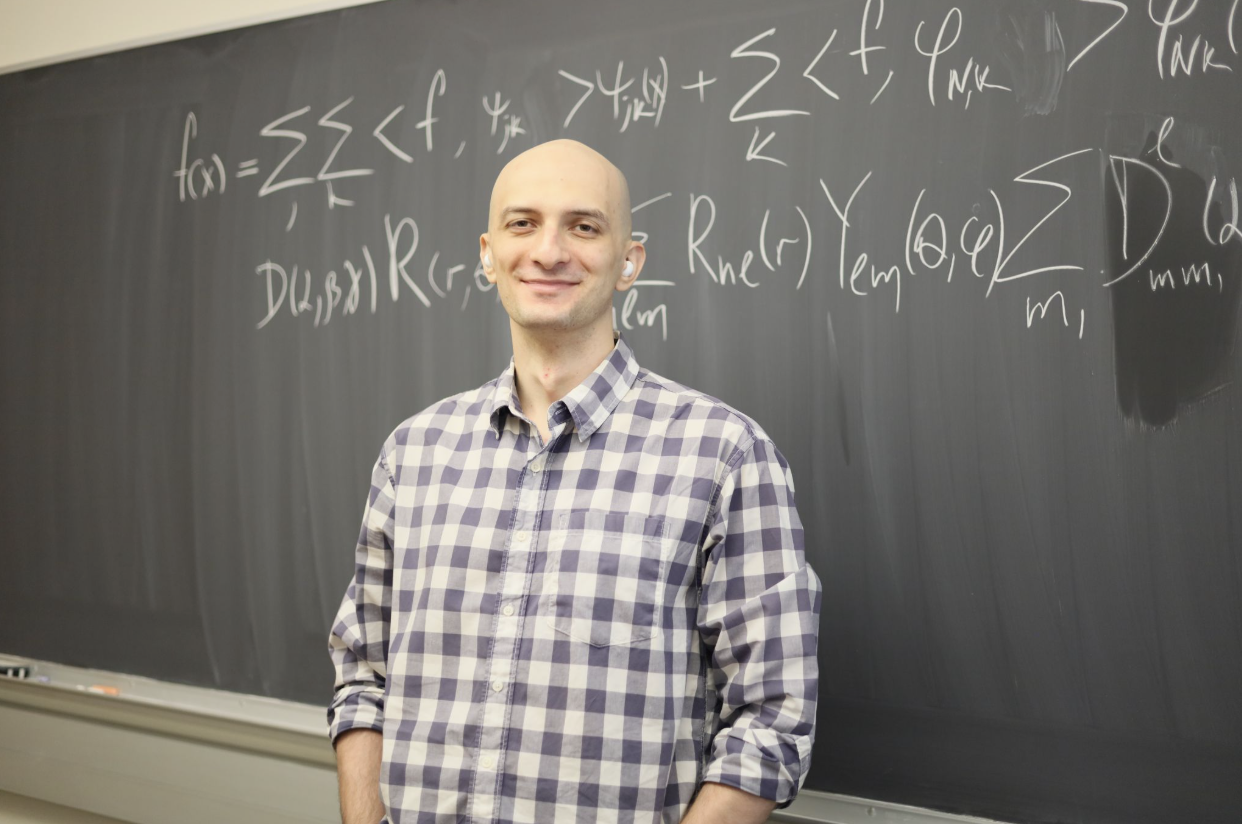
Credit: Padhorny

At the smallest scales of life, everything comes down to molecules. Proteins fold, shift, and interact in constant motion, carrying out the processes that sustain life. Drugs, too, are simply molecules, designed to bind, block, or alter these interactions. But understanding how these systems behave is far from simple. They are too small to see directly, too complex to capture fully through experiments, and too dynamic to describe as static structures.

The practical stakes are significant. Designing a drug depends on understanding how a molecule will bind to a specific protein target. Traditionally that process has required screening millions of compounds experimentally. Computational modeling offers a more targeted path, narrowing the field before anything is synthesized in a lab.

For Dzmitry Padhorny, who joined the Oden Institute for Computational Engineering and Sciences at The University of Texas at Austin as a research assistant professor in Fall 2025, this work builds on research he began at Stony Brook University in New York.  His research addresses challenges at the intersection of mathematics, physics, and biology. He develops computational methods to model molecular structures and interactions, combining deep learning with physics-based approaches to better understand biological systems and how they can be manipulated.
block.caption

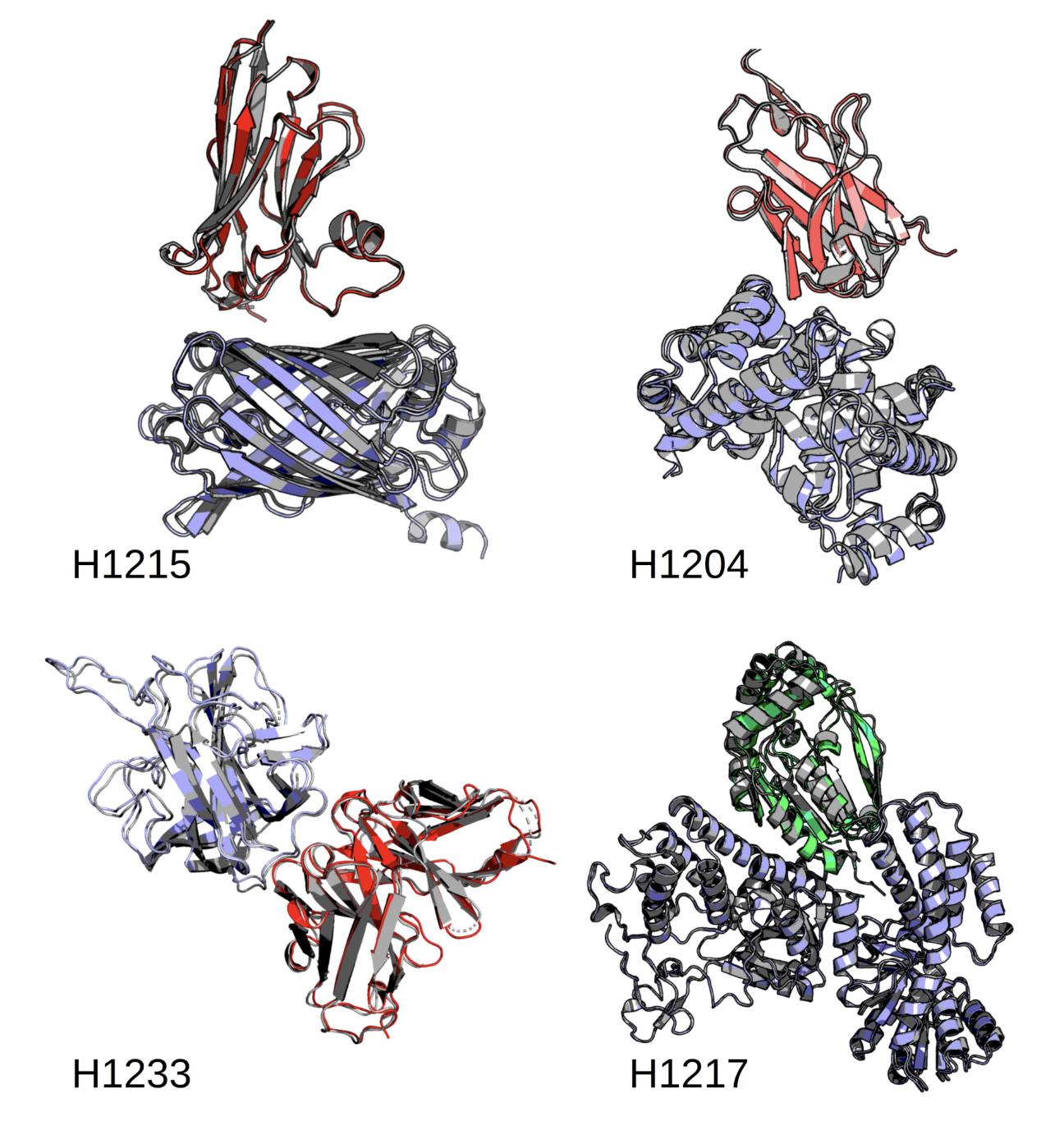
The hybrid Physics+AI methodology developed by our group excels in predicting the challenging molecular structures of antibody/antigen and viral/host protein interactions, with critical implications for understanding disease and developing novel therapeutics. Credit: Padhorny and collaborators.

Padhorny’s path to this field was not a direct one. He began his academic career in physics, drawn to its logical structure and foundational principles. Biology interested him, but the sheer volume of detail felt overwhelming compared to the simple rules that underpin physics and mathematics. That perspective shifted when he began to see biology through a different lens. At the molecular level, biological systems follow the same physical laws as any other matter. “You can use the same mathematical tools to study a protein that you use to study an atom,” he said. “Once you start bridging those two worlds, you understand that the opportunities for repurposing ideas are vast.”

That realization drew him into computational biology, where mathematical models can simulate and analyze molecular behavior. His research uses computers to reconstruct how molecules move, interact, and fit together in ways no microscope can directly observe.

“At the most basic level, life is just molecules interacting with each other,” Padhorny said. “Molecular modeling lets us observe those interactions in a digital environment. If we can see how they move and fit together, we can better understand how to manipulate them.”

One early turning point came from an unexpected connection. His longtime collaborator Dima Kozakov, Oden Institute principal faculty member and director of the Center for Computational Life Sciences and Biology, suggested applying mathematical techniques used to describe the hydrogen atom to the problem of protein interactions. Padhorny knew little about proteins at the time, but the idea was intriguing enough to pursue.

At the most basic level, life is just molecules interacting with each other. Molecular modeling lets us observe those interactions in a digital environment. If we can see how they move and fit together, we can better understand how to manipulate them.

— Dzmitry Padhorny

The project succeeded and became the foundation for a collaboration that now spans the full pipeline from biological problem formulation to methodological development. “It requires a constant exchange between biology and mathematics,” he said. “Sometimes you just have to join forces to make a real push on these big problems.”

A defining feature of Padhorny’s research is its integration of deep learning with physics-based modeling. Purely data-driven approaches have made remarkable advances in structural biology, but they carry a fundamental limitation. “Data-driven models often fail when they encounter something very different from what they were trained on,” he said. “By incorporating those principles directly into the model, we can make predictions more reliable, even when data is limited.” 

This has proven especially valuable for problems like antibody-antigen interactions, which describe how antibodies (proteins used by the immune system) recognize and bind to foreign molecules such as viruses, and viral mechanisms, where available data is sparse and the stakes for accurate prediction are high. For example, improving predictions of these interactions can help researchers design therapies that better target specific viruses or prevent infections.

One of the central difficulties in this work is that molecules are not static. “Most people think of proteins as static shapes, like puzzle pieces,” Padhorny said. “In reality, they are constantly moving and changing shape. Modeling how two flexible, moving objects interact is much more difficult than fitting two rigid structures together.” This constant motion, what he describes as the molecular “jiggle,” makes accurate modeling far more complex, especially as systems grow larger and involve more interacting components.

Despite these challenges, the field has advanced rapidly. Models that once produced rough approximations can now generate structures nearly indistinguishable from those obtained through expensive experimental methods. “The progress has been massive,” Padhorny said. “But at the same time, the limitations of current approaches are becoming clearer. We still need better tools to make a real impact in drug discovery.” Much of his work targets that gap directly, focusing on emerging diseases, novel drug targets, and systems the field has not encountered before.

Most people think of proteins as static shapes, like puzzle pieces. In reality, they are constantly moving and changing shape. Modeling how two flexible, moving objects interact is much more difficult than fitting two rigid structures together.

— Dzmitry Padhorny

The long-term vision is to move drug discovery away from trial-and-error experimentation toward something more deliberate. “In the ideal case, we could identify how a virus enters a cell in days and start designing a molecule to block it immediately,” he said. “That’s the direction we’re working toward.”

Since joining the Oden Institute, Padhorny has found an environment well-suited to that kind of ambition. “You have mathematicians, physicists, engineers, and biologists all working together,” he said. “That forces you to explain your work in new ways, which often leads to better ideas and new directions.”

Looking ahead, he sees two major frontiers for the field: capturing the full range of conformations a protein can take rather than a single snapshot, and modeling molecular behavior within the crowded, complex environment of a living cell. “The cell is a very complex environment,” he said, “and modeling that is the next big challenge.” Achieving this would allow researchers to simulate biological processes more realistically, improving the accuracy of drug design and enabling therapies that perform more reliably in real-world conditions.

He is quick to note that progress on those frontiers will not come from any single researcher. “This work is a team effort,” Padhorny said. “Graduate students and postdocs are running the simulations and testing these models. Their persistence is what makes these breakthroughs possible.” These breakthroughs primarily advance the science that underpins drug discovery, creating more reliable and efficient pathways toward developing new therapies.